
Calumet City Address Eras
Different records illuminate different years. Cook County's recording index is strongest for the modern deed chain, while regional shelves preserve earlier household clues. This table is a route map, not a promise that every address appears in each volume. Begin near the present and move back only after confirming the parcel.
| Source | Years It Covers | Where Held | What It Shows |
|---|---|---|---|
| Cook recording index | 1985 to present online | County Clerk portal; older counter records | Parties, dates, types, PIN, legal description |
| West Hammond directories | 1911/12 to 1923/24, with gaps | Gale reels and regional libraries | Names, work, streets, phones |
| Calumet City/Burnham directories | 1926 to 1959, in runs with gaps | Gale, Hammond, SSGHS, LOC routes | Residents, firms, addresses |
| Region phone books | 1946 to 1966, selected years | SSGHS | Phone and address clues |
| Sanborn maps | 1897, 1911, 1950 reference routes | Library of Congress | Street labels and building footprints |
| Federal census | Public under the 72-year rule | National Archives and libraries | Households and relationships |
A recent question begins with parcel and recording systems. A mid-century question needs telephone and directory runs. For early West Hammond, maps, deeds, newspapers, and directories work better than the modern city name alone.
Previous Residents Under West Hammond
Calumet City was incorporated as the Village of West Hammond in 1893 and took its current name in 1923. An older directory, plat, notice, or map may file the same place under West Hammond. Search both labels around the change and retain the source's own wording.
Early growth also left records outside any resident list. Water mains, hydrants, wooden walks, fire service, and power expanded with the population. The 1901 G.H. Hammond Meat Packing Plant fire and later industrial activity can lead to business, tax, newspaper, and city files tied to a street. Such context does not prove that one person occupied a house.
Does a West Hammond hit identify the modern parcel? Not alone. Match the street, lot or legal description, nearby names, and later map or deed evidence.
Calumet City Recording Search
The Cook County recording search accepts address, PIN, document number, grantor, or grantee. The inspected page displayed documents indexed through August 6, 2026, while the annual report describes online coverage from 1985. Those dates describe web access, not the age of the underlying land records.
The advanced recording form filters parties, document type, and dates. It also exposes section, township, range, subdivision, block, lot, and legal-description fields. These controls matter when a street number changed. Some plats, easements, dedications, vacations, annexations, and transfer declarations cannot be bought online, so an index hit may require a counter request. The many land fields show why a PIN and legal description can outlast ordinary street wording.
Past Calumet City Owners
A backward deed chain follows transfers from the current parcel toward an earlier owner. It does not name every person who lived there. Begin in CookViewer or the Assessor to confirm the 14-digit PIN, then save the document number, date, type, parties, legal description, linked instruments, and order status at each step.
- Locate the current address and confirm the correct parcel, not a nearby geocode.
- Search its PIN in the recording index and identify the newest transfer deed.
- Read grantor as giver and grantee as recipient, then find the grantor's earlier purchase.
- Repeat while the PIN, legal description, dates, and instruments agree.
- At the web cutoff, ask the Recordings Division about tract books, counter work, or copies.
- Grantor and grantee
- The grantor transfers an interest; the grantee receives it.
- Chain of title
- The recorded transfer sequence for one parcel. An index is not a title opinion.
- Legal description
- Lot, block, subdivision, or survey words that identify land more precisely than a street address.
The Cook County Clerk Recordings Division lists 118 North Clark Street, Room 120, Chicago, and 312-603-5050. Use that fallback for older or excluded instruments.
Calumet City Digital House Clues
The Calumet City Public Library points to an Illinois Digital Archives collection with 57 records and documents visible at inspection. Items include images, local papers, memoirs, photographs, metadata, and transcripts. Search surname, street, business, and West Hammond separately.
Read the library's digital-history announcement before viewing its capture.
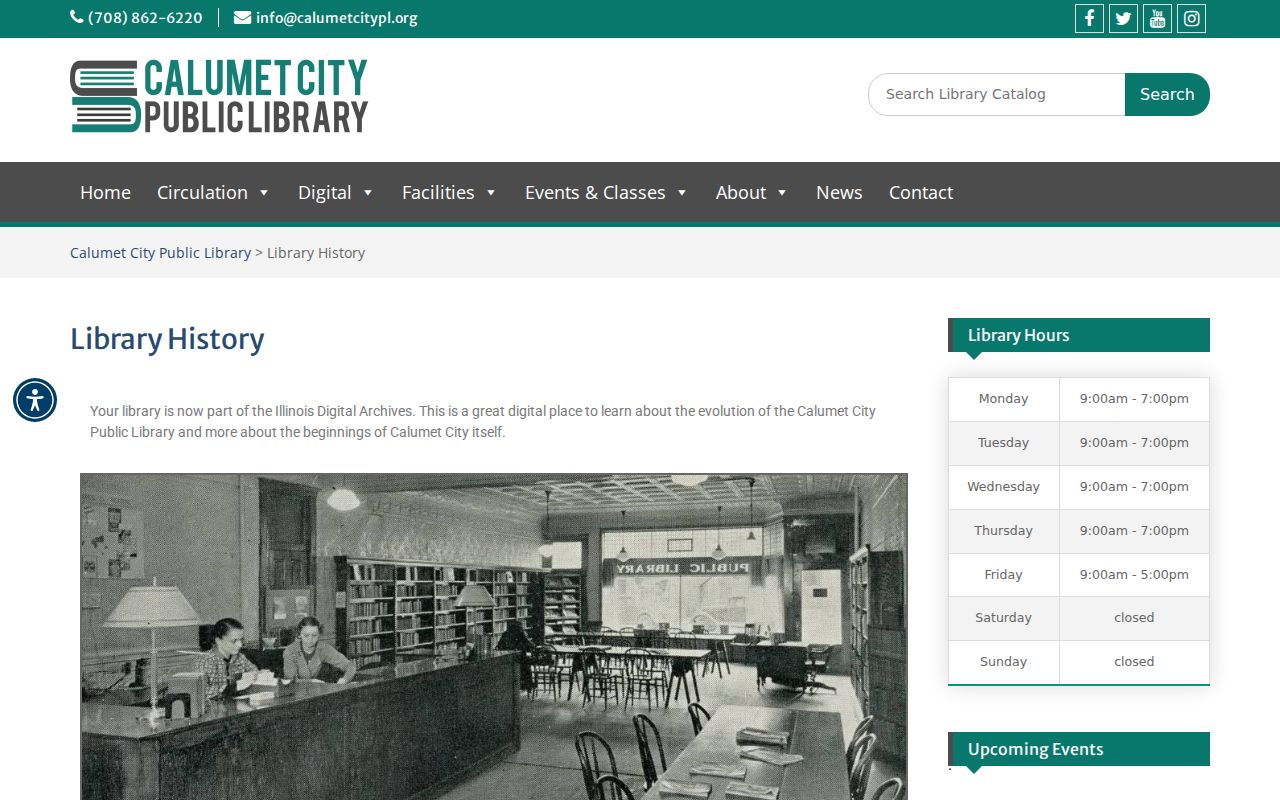
The page supplies a local handoff from paper history to the state archive.
Search the Illinois Digital Archives collection before viewing its captured landing page.
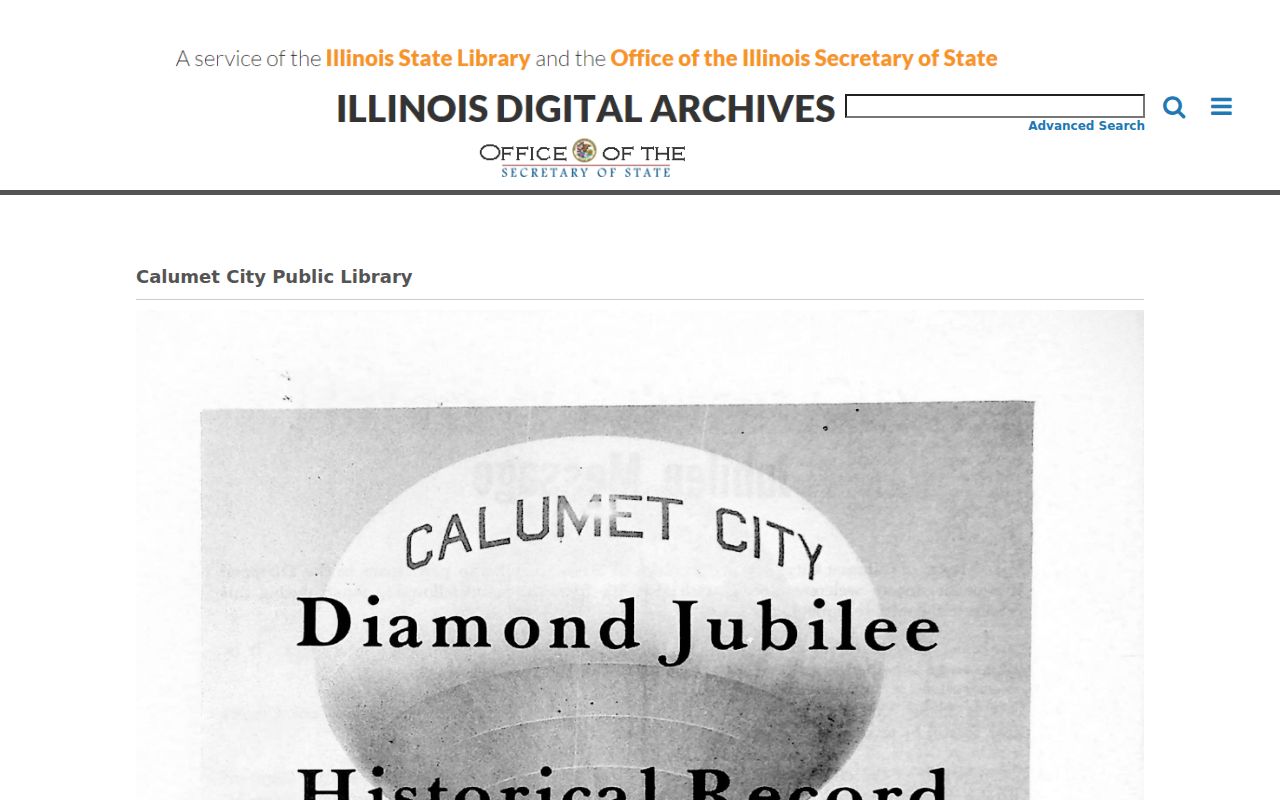
Thumbnails are leads. Confirm captions, dates, transcripts, and the original image before tying an item to an address.
Regional Previous Resident Shelves
Hammond Public Library preserves Calumet Region directories, phone books, maps, plats, papers, obituaries, yearbooks, and biographies. Exact Calumet City runs require staff confirmation. SSGHS adds burial permits, naturalizations, funeral-home material, phone books, maps, and obituary files.
Check Hammond Local History Room access before viewing its capture.
Give staff a year, street, and historical city name. SSGHS shelf codes 977.299 D-CAL and 977.299 D-POL are more useful than a broad request. Full collection detail belongs on the Calumet City city directory page; here each volume tests one address.
Mapping Old Calumet City Streets
Sanborn maps can show street names, building outlines, materials, and use. Research found West Hammond routes for 1897, a 1911 Chicago and Cook volume, and a 1950 reference. Exact sheet coverage needs inspection. A building footprint shows that a structure existed, not who occupied it.
SSGHS identifies Reed, Flowers, Van Vechten, Snyder, Sidwell, plat, and insurance-map material. Compare subdivision, lot, block, road alignment, and landmarks. No official old-number crosswalk was located, so never invent one.
Note: When an old number fails, search the legal description, historical municipality, plat, and nearby parcels before deciding the property is missing.
Calumet City Household Sequence
Owners are only one layer of previous residents. Directories, census schedules, newspapers, obituaries, and probate can reveal relatives, boarders, or other occupants who never appear as grantees. Each is a dated snapshot, not proof of continuous residence.
- Transcribe the nearest directory line, including name, address, phone, work, spouse, and abbreviations.
- Check the scan when OCR uses “CalCty” or “(C C)” because text recognition may be wrong.
- Pair that year with the nearest public census and confirm household links and geography.
- Use newspapers, obituaries, burial permits, naturalizations, vital records, and probate as bridges.
- Record conflicts and gaps rather than filling them with an assumed occupant.
Cook County genealogy records use age thresholds and mail or in-person requests. Court archives and the Illinois State Archives database are fallbacks for older probate, naturalization, land, tax, court, and vital series.
Lawful use. Research previous residents for family history, estate work, or the history of a Calumet City house. Never use an address trail to harass, watch, or harm a living person.
Calumet City Permit Fallback
Building and zoning files can fill a gap when previous residents do not appear in a deed or directory. Calumet City Building and Zoning handles permits, inspections, zoning, floodplain, code, contractor, and property-process records at 670 Wentworth. No public city permit or code-case index and no retention cutoff were found. Give the office the address, PIN, date range, and type of work. Ask whether the record is a permit, inspection card, plan, complaint, or zoning file.
The Building and Zoning page is the direct route. If no public search is available, use the Calumet City FOIA instructions or Public Records Center. Illinois FOIA provides a request channel but does not mean an old file was retained. Copying, postage, or certification charges may apply.
A permit applicant may be an owner, contractor, agent, or other party. Treat that name as evidence of a role in the project, not proof of residence. Compare its date and parcel description with the deed chain, directory year, map footprint, and newspapers before adding it to a household timeline.